Custom vs Ready-Made Engagement Rings: Which Costs Less?
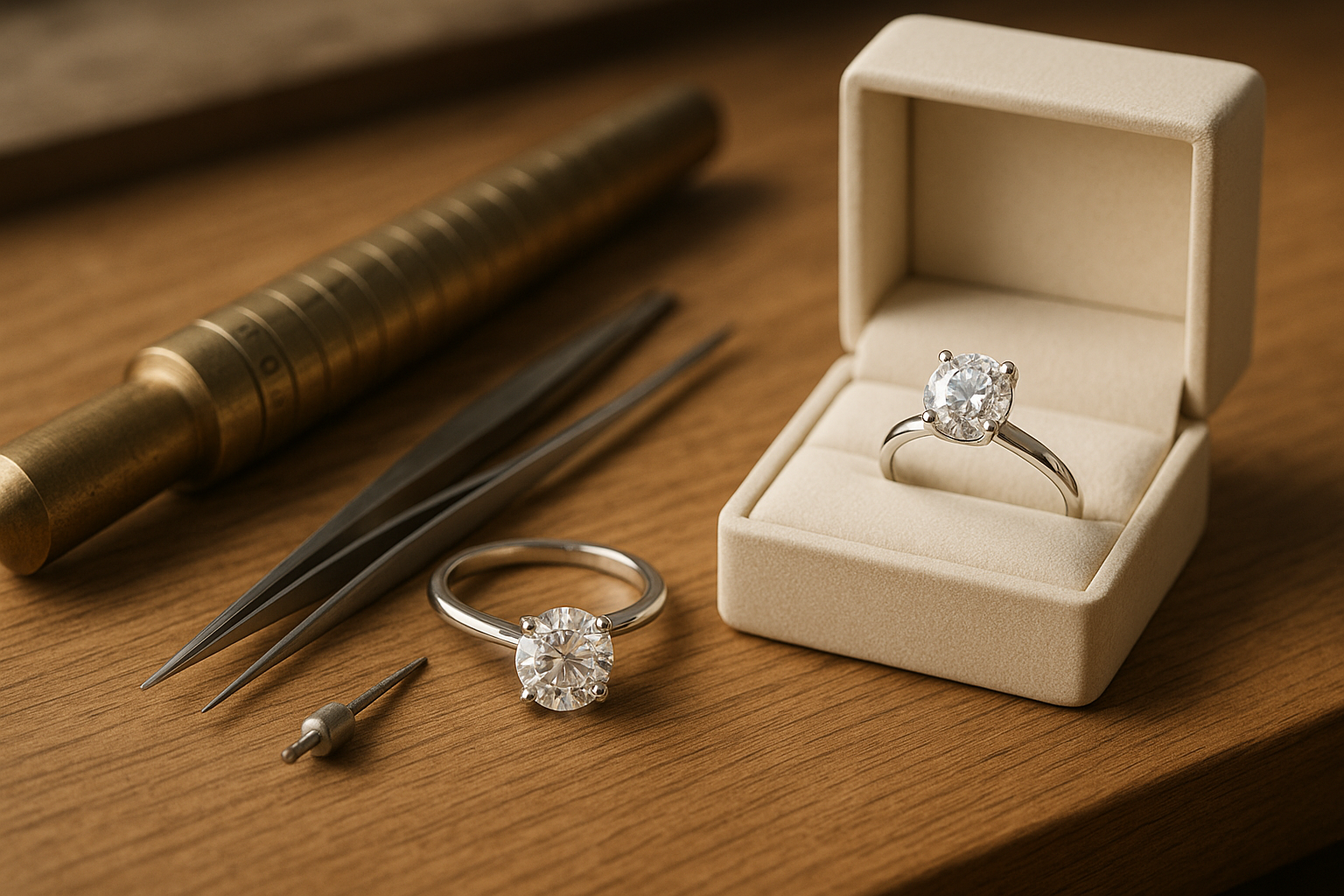
Custom vs ready-made engagement rings come down to control versus speed, not price: a custom ring built around a certified loose diamond often matches or beats a comparable pre-set ring at branded retail, because pre-set rings bundle markup on both stone and setting. Choose ready-made for same-week delivery; choose custom for stone-level pricing transparency and a design built to spec.
TL;DR
- Custom engagement rings often cost the same or less than comparable pre-set rings at branded retail, because pre-set rings carry markup on both the stone and the setting; custom lets you price each component separately.
- Choose ready-made if you need the ring within days; most pre-set rings ship the same week, while custom builds typically require several weeks for design, CAD approval, and casting.
- Choose custom if your priority is stone-level pricing transparency: you select a certified loose diamond (IGI or GIA graded) at its market price, then pay a defined cost for the setting and labor.
- Set your stone budget first, then the setting: the diamond usually consumes the majority of the total, and a lab-grown center stone can free up significant budget for a more detailed custom setting.
- Get the diamond’s grading report number before committing on either path; a certificate from IGI or GIA lets you verify cut, color, clarity, and carat independently instead of relying on store labels.
- Ask any custom jeweler for a written quote that separates stone cost, setting cost, and labor, plus a CAD render for approval before casting; refusal on either is a reason to walk away.
Is a Custom Engagement Ring More Expensive Than a Ready-Made One?
No - at the same stone specification, a custom engagement ring often matches or beats the price of a branded ready-made ring. Price is driven by three things: the center stone, the setting build, and who marks each one up. The word “custom” adds none of them. A ready-made ring at a branded retailer bundles markup on both the stone and the setting into one sticker price. A custom build separates them, letting you price-check a certified loose diamond independently and pay for the setting as labor and materials rather than brand positioning. [NEEDS PROOF: 3-5 anonymized recent custom orders priced against same-day ready-made retail equivalents at matched specs]
The “custom is expensive” reputation comes from two places that do not apply to most buyers: high-jewelry houses where custom means couture pricing, and mall-store narratives that frame custom as an upsell. In practice, the center stone accounts for the majority of total cost in most builds [NEEDS PROOF: TLJ stone-vs-setting cost split published as a range across past orders], so sourcing the stone well matters far more than the custom vs ready-made label. The rest of this guide compares the two paths on:
- Price mechanics: where markup actually sits in each model
- Timelines: same-week delivery vs a design-and-build schedule
- Quality control: certification, inspection, and craftsmanship differences
- Best-for scenarios: which buyer each path genuinely serves
Start with how The Local Jewel builds custom or browse ready-to-customize engagement ring styles to see both paths priced side by side.
What Actually Drives the Price of an Engagement Ring?
Four components determine what any engagement ring costs: the center stone, the setting metal, the labor to build it, and the markup layers between the maker and you. The center stone dominates the total in most builds, which means stone sourcing moves your budget far more than the custom vs ready-made decision does. [NEEDS PROOF: stone-vs-setting cost ratio range from TLJ order history, calculated separately for lab-grown and natural samples.] The single biggest lever inside the stone budget is lab-grown vs natural: at the same carat weight, color, and clarity, that one choice shifts the price more than any setting decision. See lab-grown vs natural diamonds for the full breakdown. Setting costs follow predictable mechanics: metal type and weight (platinum is denser than gold, so the same design weighs and costs more; 18k contains more gold than 14k), accent stone count, and bench labor.
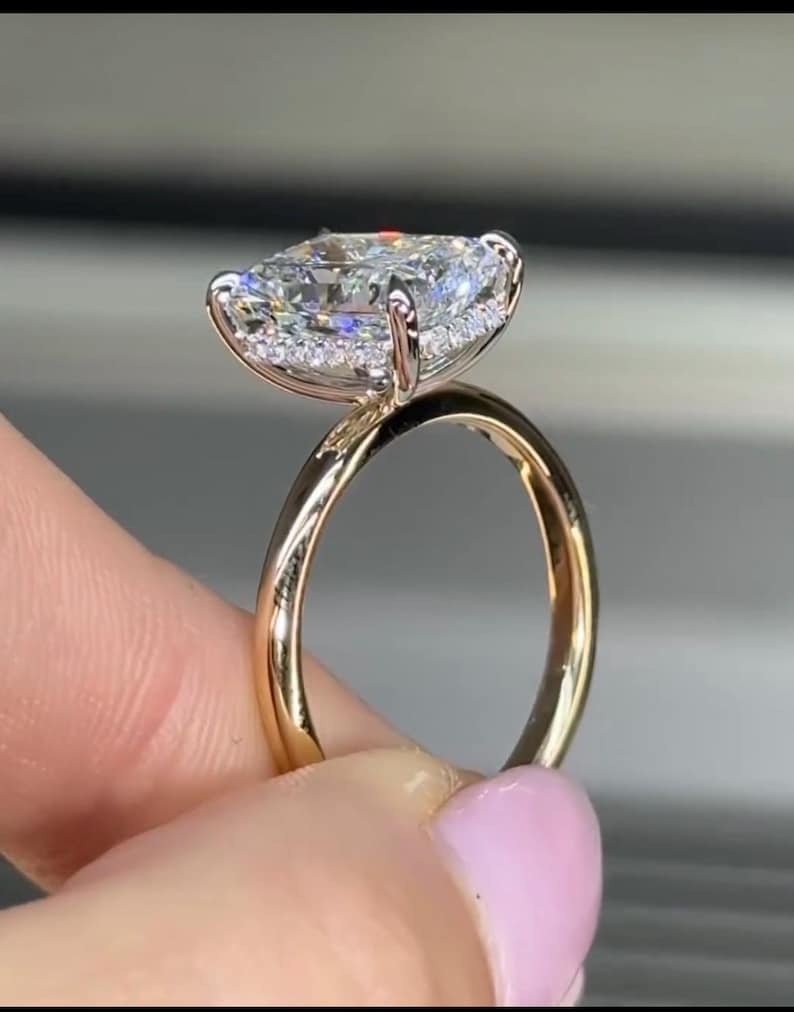
Design complexity and markup are the two variables buyers most often miss. Complexity adds cost through real work: CAD modeling, casting, stone setting, and hand-finishing. Features like a hidden halo, pave shoulders, or a cathedral profile each add setting labor and melee stones, typically tens to a few hundred dollars per feature rather than thousands. Our guide to choosing an engagement ring setting covers which features earn their cost. Markup works differently: brand premium and physical retail overhead add price without adding material or labor. Pre-set rings bundle stone and setting into one number, which obscures what the stone alone is worth. A rough anatomy of any quote:
- Center stone: the majority of total cost in most builds
- Setting metal: driven by metal choice and gram weight
- Labor and complexity: CAD, casting, setting, finishing
- Markup layers: brand premium, retail overhead, bundled pricing
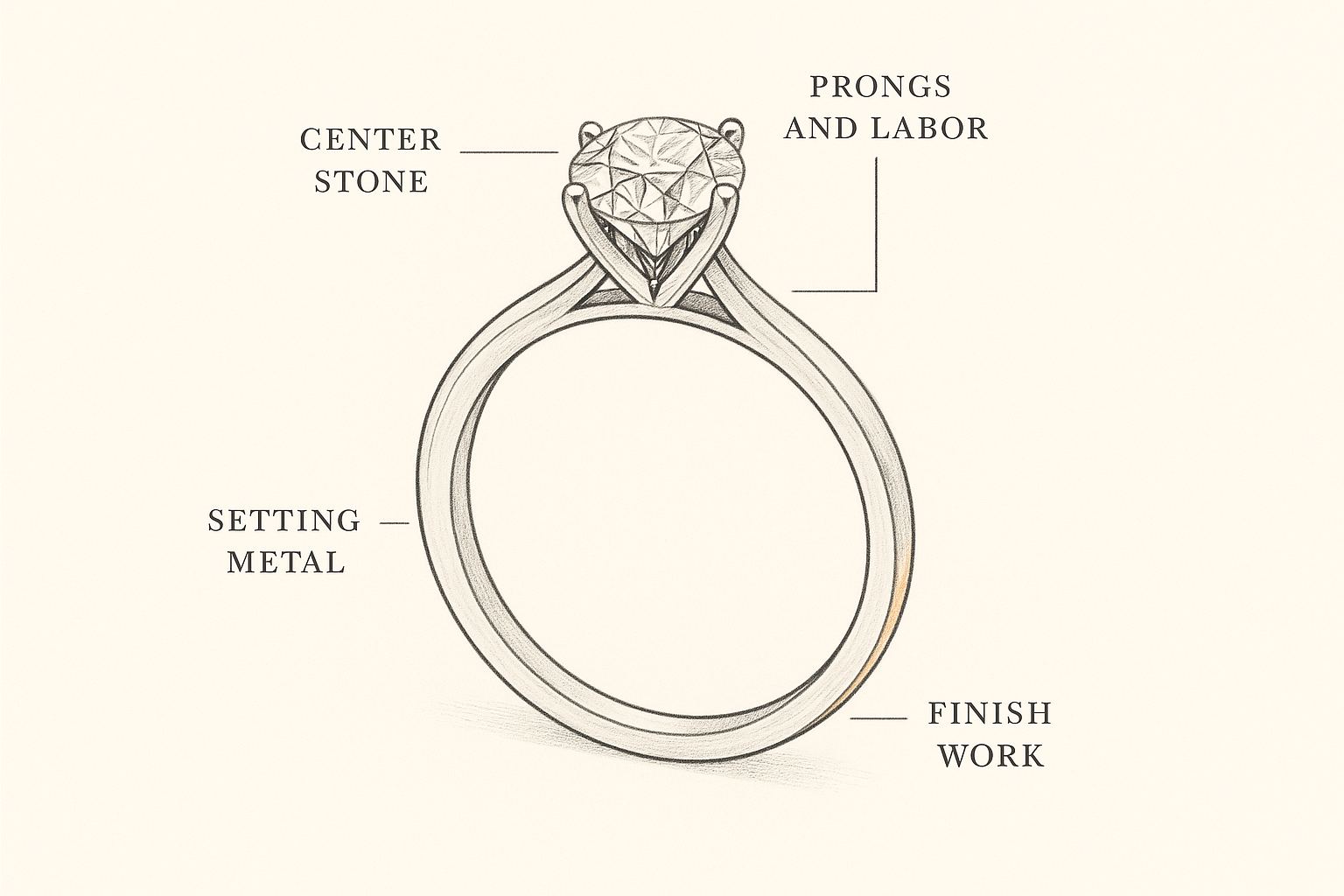
The price of any ring, custom or ready-made, comes down to the same components.
Custom vs Ready-Made Engagement Rings: Side-by-Side Comparison
Custom and ready-made rings diverge on five practical factors: price at equal specs, pricing transparency, timeline, quality control, and personalization. At matched specs, buying a certified loose stone and setting it in a custom mount frequently prices below the same-spec pre-set ring at branded retail, because pre-set rings carry retail markup on both the stone and the setting [NEEDS PROOF: 2-3 matched price comparisons at named specs, e.g., 1.5 ct lab-grown F VS1 excellent cut, with dates and screenshots on file]. Transparency follows the same logic. A loose diamond with an IGI or GIA report can be independently price-checked against the open market; a pre-set ring without a stone-specific report cannot, since in-house appraisals are not independent grading (GIA and IGI grading documentation to cite at publish).
| Factor | Custom | Ready-Made |
|---|---|---|
| Price at equal specs | Often lower; no bundled retail markup [NEEDS PROOF: matched comparisons] | Often higher at branded retail |
| Pricing transparency | Certified loose stone is independently price-checkable | Limited without a stone-specific lab report |
| Timeline | [NEEDS PROOF: verified TLJ range from approved design to delivery] | Ships same week |
| Quality control | Inspect the exact stone before setting | Accept the bundled stone as-is |
| Personalization | Full control: design, metal, sizing, heirloom stones | Limited to stocked options and standard sizes |
| Documentation | Lab report tied to your specific stone | Varies; often appraisal only |
Custom is best for buyers with a specific design vision, spec-driven diamond shoppers who want to inspect the exact stone before it is set, unusual finger sizes, mixed-metal designs, or heirloom stone projects. Ready-made is the right call when the proposal is under two weeks away, when the buyer needs to see the finished ring before committing, or at sub-$2,000 budgets where custom labor consumes too much of the total. At that price point, a well-made stocked ring from a curated selection like engagement rings under $2,000 puts more of the budget into the stone. Buyers between the two paths can start with a simple solitaire setting and upgrade the stone independently later.
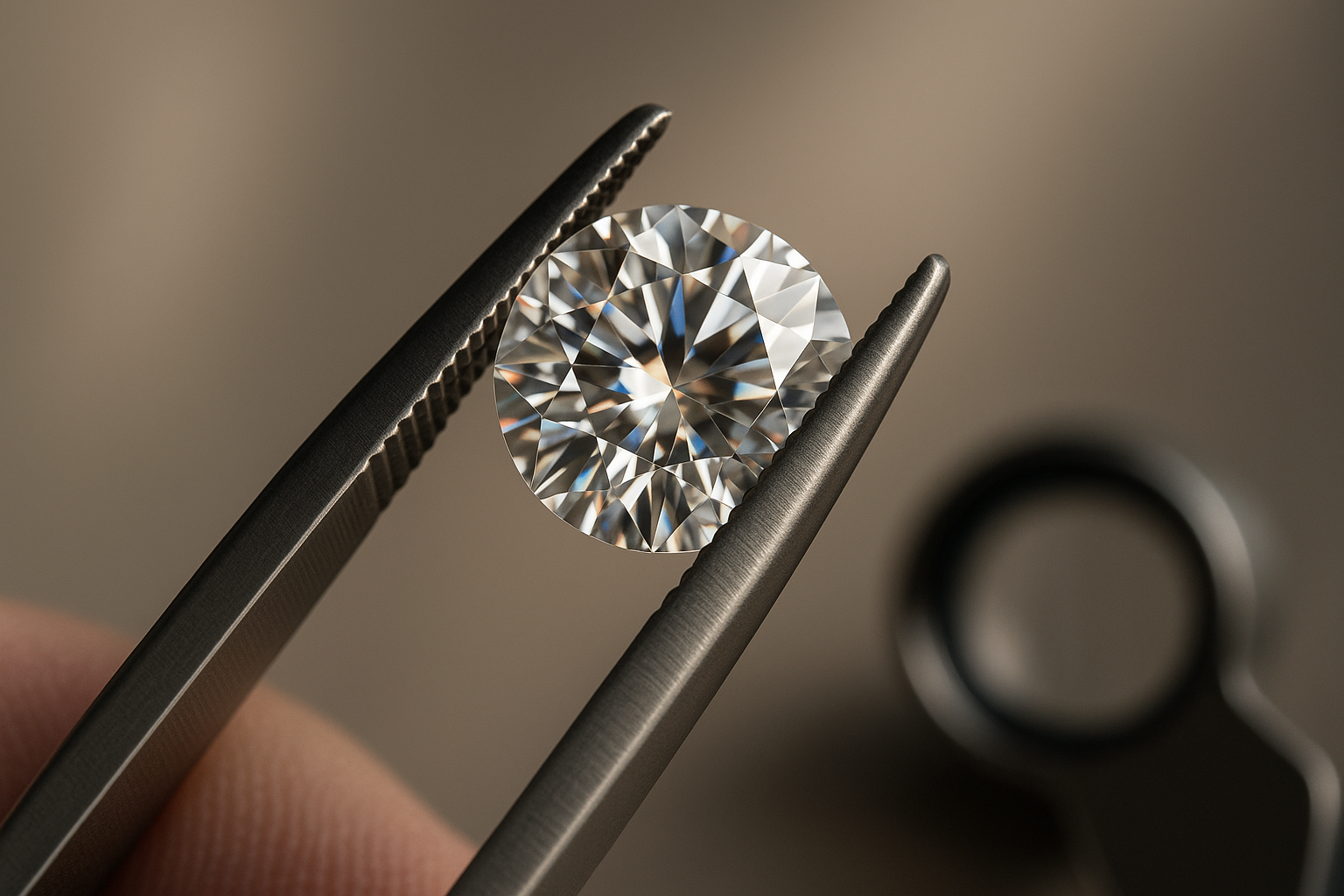
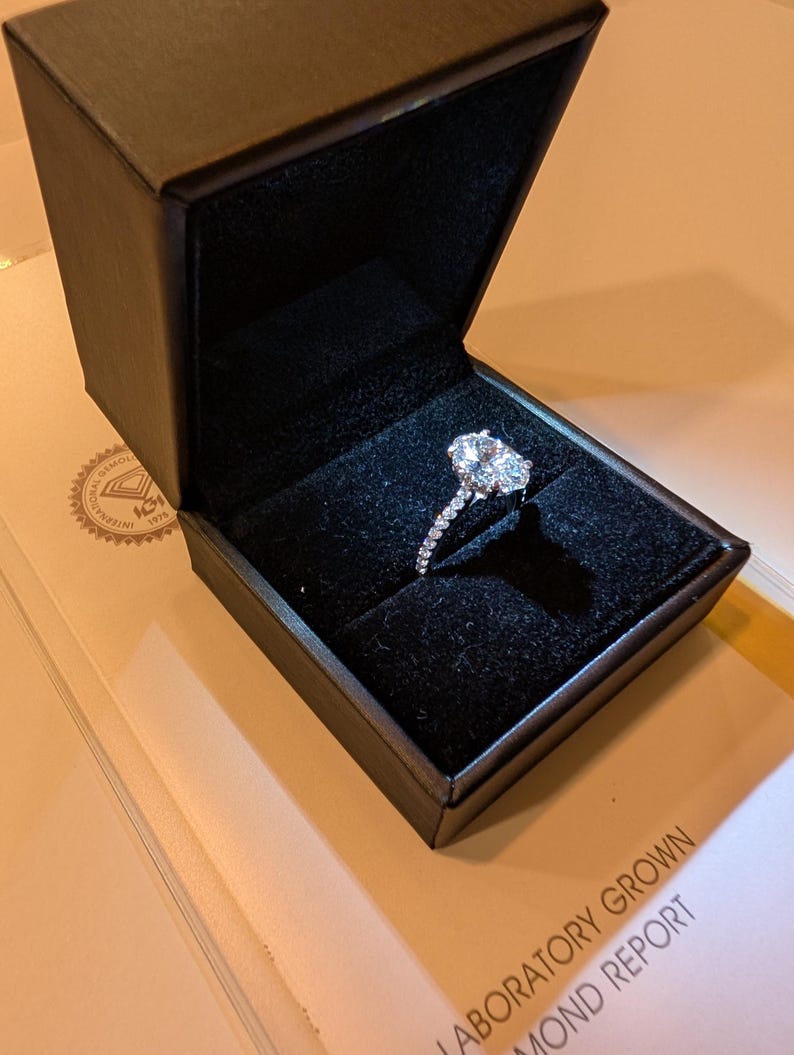
Custom means inspecting the exact stone before it is ever set.
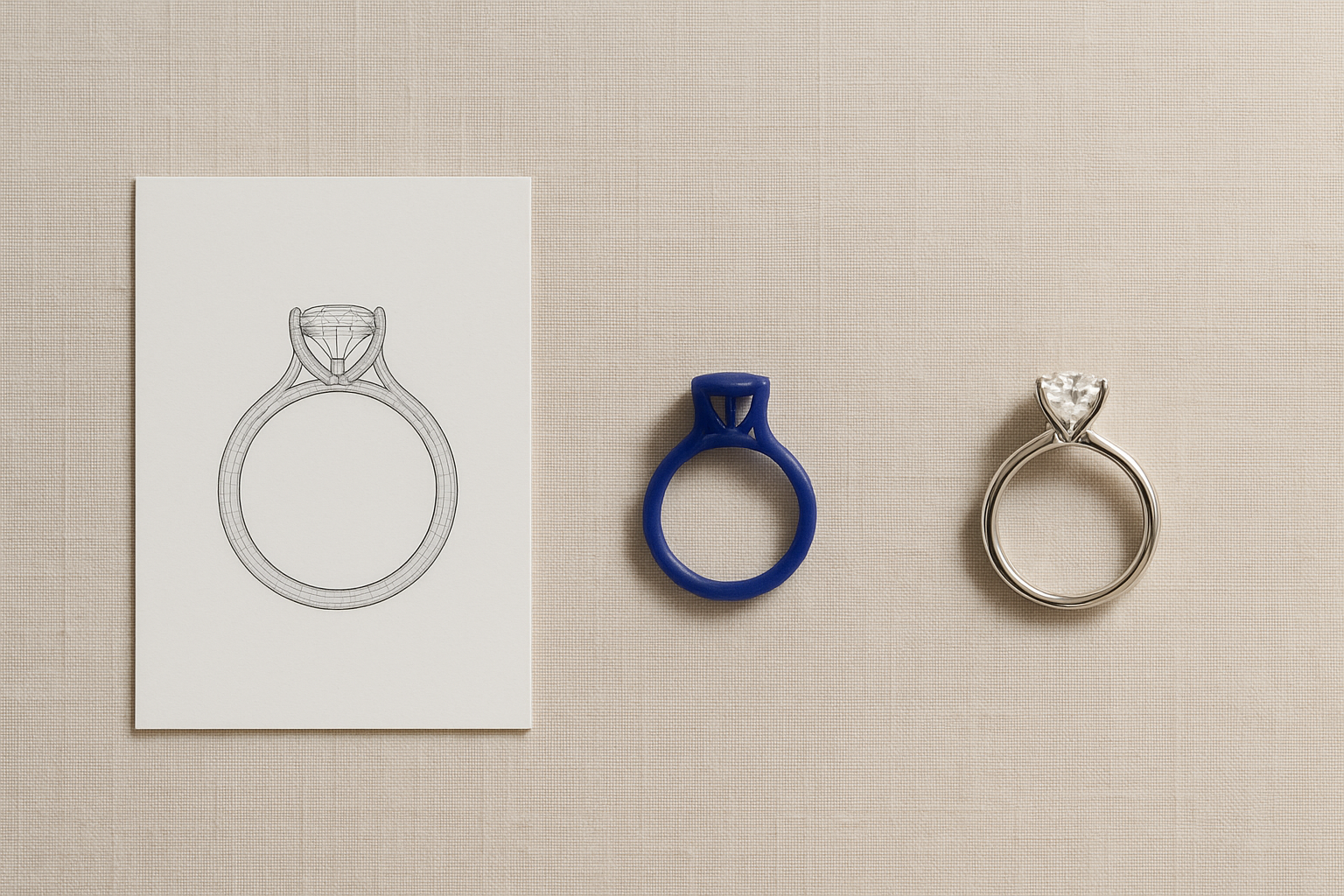
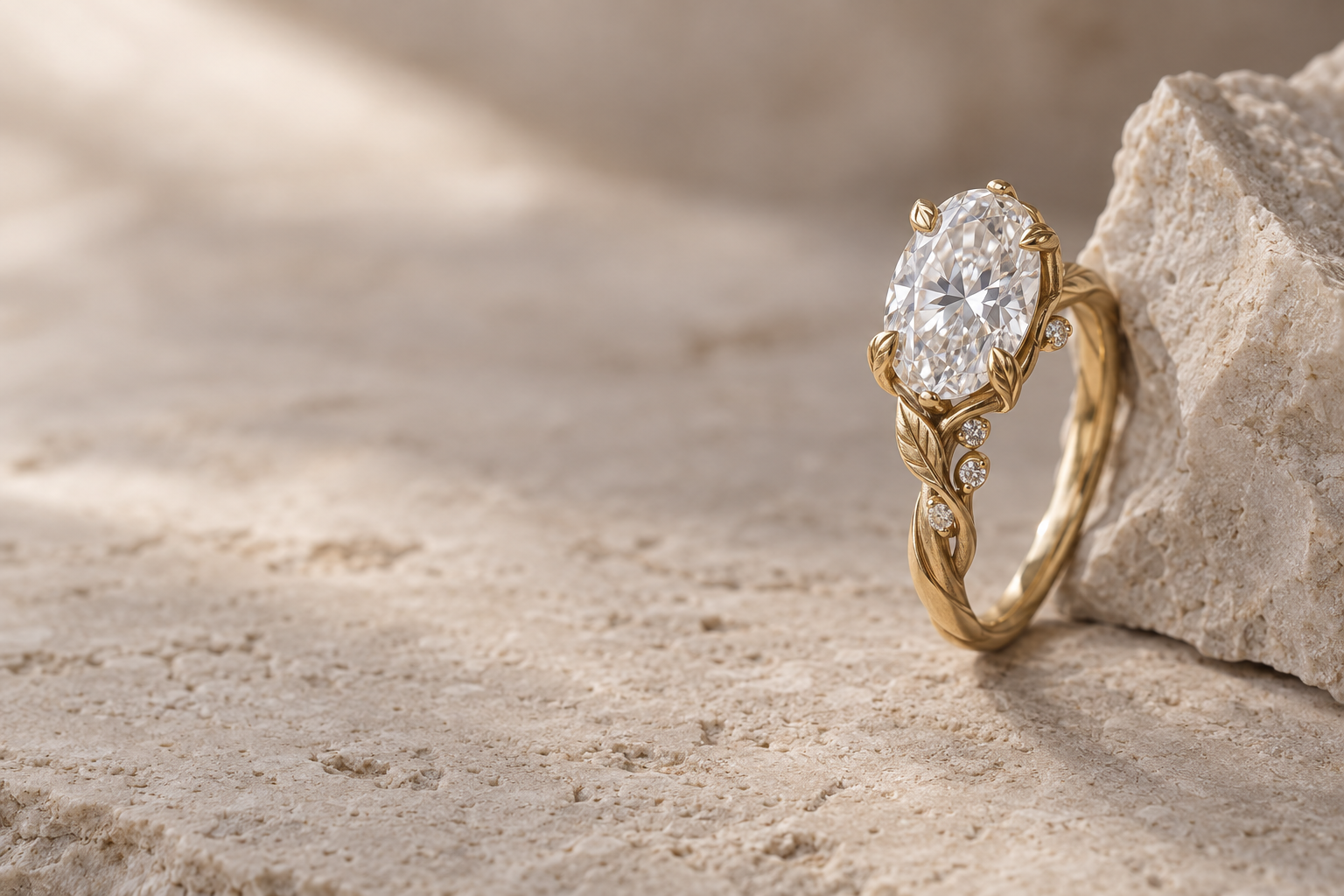
The custom timeline: design model, cast, then finished ring.

Is It Cheaper to Buy the Diamond Loose and Have It Set?
Buying a certified loose diamond and having it set separately usually costs less than buying the same-spec pre-set ring at branded retail. The mechanic is simple: a loose stone with an IGI or GIA report can be price-checked against the open market before you commit, while a pre-set ring bundles stone and setting markup into one number that hides where the money goes. [NEEDS PROOF: matched comparison of a loose certified stone plus setting quote vs the same-spec pre-set branded ring, with dated records.] Many pre-set rings at typical mall and branded retailers also ship without a stone-specific lab report, or with an in-house appraisal only, which removes your ability to comparison shop the stone at all. [NEEDS PROOF: retailer product-page documentation practices, source to gather.]
Price-checking a loose stone requires reading the report, not just the price tag. Match these fields exactly when comparing two diamonds:
- Carat weight - to the second decimal, since price jumps at thresholds like 1.00 and 1.50 ct
- Color - graded D to Z, per GIA and IGI methodology; one grade apart is often invisible but priced differently
- Clarity - Flawless to Included scale; VS and SI stones vary widely, so compare within the same grade
- Cut grade - the largest driver of visible sparkle; hold Excellent or Ideal constant when comparing round stones
Two stones matched on all four are directly price-comparable. See how to choose a lab-grown diamond for a deeper walkthrough.
The loose-stone strategy is not always the winner. Pre-set can beat it on clearance ready-made inventory, on entry budgets where a modest bundled ring undercuts any separate setting quote, and on accent-heavy pave or halo designs where labor, not the center stone, dominates cost. Semi-custom is the middle path: a proven setting design, such as a classic solitaire from a round engagement ring collection, paired with your choice of certified stone. You keep the pricing transparency of a loose diamond without paying for one-off design work.
How Much Does a Custom Engagement Ring Cost by Budget?
Custom engagement rings become practical at roughly $2,000 and scale predictably from there: below that line, fixed CAD design and labor costs consume too much of the budget, and a ready-made or semi-custom ring under $2,000 delivers more stone for the money. Above $2,000, the same custom labor cost spreads across a larger total, so the custom premium shrinks as a percentage while the design control stays constant. At every tier, spend on cut quality first, then carat weight, and buy color and clarity only to the eye-clean threshold. Choosing lab-grown over natural shifts each tier up roughly one carat class at the same money [NEEDS PROOF: same-day matched-spec pricing pulls, lab-grown vs natural, dated].
| Budget | Lab-grown center (typical) | Natural center (typical) | Setting examples |
|---|---|---|---|
| $2,000-$4,000 | [NEEDS PROOF: TLJ build examples per tier with confirmed specs and final prices] | [NEEDS PROOF: matched natural specs] | Solitaire, hidden halo |
| $4,000-$8,000 | [NEEDS PROOF] | [NEEDS PROOF] | Oval solitaires, pave bands |
| $8,000-$15,000 | [NEEDS PROOF] | [NEEDS PROOF] | Three-stone designs, cathedral settings |
| $15,000+ | [NEEDS PROOF] | [NEEDS PROOF] | Fully bespoke, complex CAD work |
The setting itself stays relatively stable across tiers: a solitaire, hidden halo, or pave band changes total cost far less than moving up a carat class, which is why budget growth should flow to the center stone. The only way to know an exact number is a quote, not a guess. A custom consultation produces a firm price on a specific certified stone (IGI or GIA report) and a rendered design before any payment or commitment, so the budget question is answered with real figures rather than published starting-at prices that rarely match the ring a buyer actually wants.
What Is the Custom Engagement Ring Process and How Long Does It Take?
A custom engagement ring follows seven steps - consultation, stone selection, CAD design, render approval, casting, setting, and final inspection - and typically takes [NEEDS PROOF: verified TLJ production range from design approval to delivery] once the design is approved. The process starts with a consultation covering budget, diamond shape preference, and any inspiration photos. Next, the buyer selects a specific certified diamond (IGI or GIA report included) from loose inventory, then reviews a CAD model and photorealistic render of the exact ring. Nothing is cast until the buyer approves both the stone and the render, so nothing is built blind. Production then moves through casting, stone setting, polishing, and a final quality inspection before delivery. Buyers planning a proposal should add a one-to-two-week buffer beyond the quoted timeline.
Each stage has a fixed buyer checkpoint, which is what makes custom lower-risk than it sounds:
- Consultation: bring a budget range and shape preference; exact ring size is helpful but adjustable later
- Stone approval: confirm the specific certified diamond, verifiable against its lab report
- CAD render approval: request unlimited-cost-free revisions before production begins [NEEDS PROOF: confirm TLJ revision policy]
- Final inspection: the finished ring is checked against the approved render before shipping
Rush timelines are honest, not magic: casting and setting can sometimes be expedited, but CAD revisions and stone sourcing cannot be safely compressed, since rushing those steps is where mistakes happen. Buyers on a tight deadline should start a consultation early or browse certified in-stock options as a faster fallback.
When Is a Ready-Made Ring the Smarter Buy?
A ready-made ring is the smarter buy when the proposal is less than two weeks away, the total budget is under $2,000, or the design is a classic that custom work cannot meaningfully improve. Production timelines are the hardest constraint: a ready-made ring ships the same week, while custom carries design, CAD, and casting stages that cannot be safely compressed. Budget mechanics matter too. Custom labor is a fixed cost that does not shrink with the stone, so on a sub-$2,000 ring it consumes a disproportionate share of the money that should go into the diamond. And for popular designs like a plain solitaire or a standard halo, custom adds cost without adding meaningful difference, because those settings are already mass-produced well at competitive prices.
Ready-made also wins in three specific scenarios:
- You need to hold the ring first. Custom buyers approve renders and wax models; if seeing the finished piece before committing is non-negotiable, buy finished.
- You want a genuine vintage or antique ring. Period pieces cannot be authentically replicated; a reproduction is a new ring in an old style. The distinction matters, and vintage vs antique is worth understanding before you shop.
- You value zero production risk. A finished ring has no revision rounds, no casting variables, no timeline slippage.
One rule applies regardless of path: demand a stone-specific IGI or GIA report with the ring, not just an in-house appraisal. A lab report ties the grade to that exact diamond and lets you price-check it independently; an appraisal is the seller grading its own merchandise.
How Do I Start a Custom Engagement Ring Online?
Starting a custom engagement ring online takes one step: send your budget, style direction, and timeline through the contact page, and a jeweler responds with certified IGI or GIA stone options priced within that number. The conversation is budget-first by design - the stone typically drives most of the total cost, so locking the stone budget before the design prevents the most common overspend. From there the process runs stone selection, design and CAD approval, then production. [NEEDS PROOF: confirm consultation is free or state actual terms.] The verdict from this guide holds at this stage: at equal certified specs, custom competes with ready-made on price, beats it on transparency and fit, and loses only on speed. If the proposal is more than a few weeks out, custom costs nothing extra to explore.
Common residual questions, answered plainly:
- Can I use a family stone? Heirloom diamonds and gemstones can be reset into a new custom mount. [NEEDS PROOF: confirm TLJ heirloom resetting policy and any inspection requirements.]
- Can I match a wedding band later? Yes. A custom design can be built with a matching or contoured wedding band in mind from the start, which avoids fit problems later.
- What if the size is wrong? Most custom rings can be resized. [NEEDS PROOF: confirm TLJ resizing terms, cost, and any style exclusions such as full eternity bands.]
Buyers in Winter Park and Orlando can pair the online process with in-person service: see stones, approve the design, and pick up the finished ring locally through The Local Jewel. [VISUAL: photo of a completed TLJ custom ring beside its CAD render, from an actual order with client permission.]
Custom vs Ready-Made Engagement Rings: Side-by-Side Comparison
At the same stone specification, a custom ring built from a loose certified diamond typically matches or beats the price of a comparable branded ready-made ring, because you cut out the bundled-pricing markup on pre-set stones. Ready-made wins on speed, not price: it is the right call only when the proposal timeline is short or the buyer needs to see the finished ring first.
| Factor | Custom (loose stone + built setting) | Ready-Made (pre-set retail ring) |
|---|---|---|
| Price at equal specs | Stone and setting priced separately; each component can be shopped and negotiated on its own merits. [NEEDS PROOF: 3-5 anonymized TLJ custom orders priced against same-spec ready-made retail equivalents] | Bundled price often includes brand premium and retail overhead; the stone’s individual value is obscured inside the total |
| Pricing transparency | Certified loose diamond (IGI or GIA report) can be independently price-checked against comparable stones before purchase | Stone-specific grading report not always provided; without one, the diamond cannot be independently price-checked |
| Center stone control | Buyer selects and inspects the exact stone before it is set; can compare multiple certified options side by side | Buyer accepts the stone the retailer chose; swapping it usually means buying a different ring |
| Timeline | [NEEDS PROOF: verified TLJ production range from approved design to finished ring]; add design and CAD approval time up front | In stock ships within days; resizing typically adds a short delay |
| Design flexibility | Any verifiable combination: hidden halo, mixed metals, unusual finger sizes, heirloom stone resets, non-standard shapes | Limited to the retailer’s catalog; modifications, when offered, are priced as add-ons |
| Grading documentation | IGI or GIA report tied to the specific loose stone; report number can be laser-inscribed on the girdle and verified online | Varies by retailer; some pre-set rings carry stone-specific reports, many carry only an in-house appraisal |
| Quality control | Stone inspected loose, where inclusions and cut quality are fully visible; prongs and setting built around that exact stone | Setting can hide girdle and pavilion inclusions; buyer evaluates the ring as a finished unit |
| Revisions and fit | CAD render approved before casting; changes cost little before metal is cast, more after | What you see is what you get; changes after purchase mean bench work at additional cost |
| Best for | Spec-driven buyers, a specific design vision, unusual ring sizes, heirloom stones, buyers with 4+ weeks of lead time | Proposals under 2 weeks away, buyers who want to hold the finished ring before paying, standard sizes and popular styles |
| Not for | Buyers who need the ring this week or are uncomfortable approving a design from a render | Buyers who want stone-level price verification, a non-catalog design, or an heirloom stone reset |
Frequently asked questions
Is a custom engagement ring more expensive than buying one ready-made?
Not necessarily. Custom pricing depends on the same inputs as ready-made rings: the center stone, metal weight, and labor. A custom ring from an independent jeweler often costs the same or less than a comparable designer setting because you skip brand-name retail markup. Custom costs more only when the design itself is complex, such as heavy pave work, hidden halos, or intricate CAD modeling.
Are custom engagement rings worth it?
Custom is worth it if you want a specific design, a better-matched stone for your budget, or full control over quality details like prong style and band width. It is not worth it if you need a ring in under two weeks or you already love an in-stock setting. The value comes from allocating your budget deliberately instead of paying for inventory you did not choose.
What actually drives the cost of a custom engagement ring?
The center stone is the largest cost driver, typically the majority of the total price. After that: metal type and weight (platinum costs more than 14k gold), accent stones, design complexity, and labor. CAD design and casting are fixed steps whose cost matters less as the total budget rises. Choosing lab-grown over natural diamonds reduces stone cost significantly at the same carat weight and grades.
Is it cheaper to build your own engagement ring than buy one from a store?
It can be, when you buy the loose diamond and setting through a jeweler with wholesale-level sourcing instead of paying retail markup on a pre-set ring. Pre-set rings at chain stores often bundle uncertified or lower-grade stones at brand pricing. Building the ring lets you compare certified IGI or GIA stones directly and put savings toward size or quality.
How long does a custom engagement ring take to make?
Plan on roughly four to six weeks from consultation to finished ring for most custom projects: stone selection, CAD design and approval, casting, stone setting, and final polish. Complex designs or sourcing a specific natural diamond can extend that. Ready-made rings ship in days, so timeline is the clearest advantage of buying pre-set. [NEEDS PROOF: confirm The Local Jewel's standard production timeline]
Do custom rings cost more than designer settings?
Usually the opposite. Designer settings carry brand markup on top of materials and labor. A custom ring replicating a similar style through an independent jeweler prices on actual metal, stones, and workmanship. You pay a premium for the designer name, not superior construction. The exception is a very simple designer solitaire, which can be price-competitive because there is little labor to mark up.
What are the downsides of a custom engagement ring?
The main downsides are time and commitment. Custom takes weeks, not days, and once casting begins the design is final, so returns work differently than with stock rings. You also cannot try on the exact finished ring beforehand, only CAD renders and similar samples. Buyers on tight deadlines or who want to physically compare finished rings side by side are better served by ready-made.
When is a ready-made engagement ring the better choice?
Choose ready-made when you need the ring fast, your budget is firm and a stock option fits it exactly, or the recipient loves a specific existing setting. Pre-set rings also suit buyers who feel overwhelmed by decisions; the stone and setting are already paired. Verify the diamond carries an IGI or GIA certificate, since some pre-set rings use ungraded stones.
Where should I get a custom engagement ring made online?
Look for an independent jeweler that offers certified IGI or GIA diamonds, transparent line-item pricing, CAD previews before production, and direct access to the person making your ring. The Local Jewel builds custom engagement rings this way, with lab-grown and natural diamond sourcing at private-jeweler pricing and a consultation-first process, serving Winter Park and Orlando alongside online clients nationwide.
Ready to design your piece?
Get 3D renders + a written quote within 24-48 hours - no payment required until you love the design.
Start your custom quote